KhetiAI
AI-Powered Agriculture Platform
Overview
KhetiAI started from a simple observation: farmers in my area struggled with crop diseases but had no quick way to identify or treat them. Having helped farmers at my family's agriculture shop, I saw this problem firsthand.
So in June 2025, I started building KhetiAI - a mobile app that uses AI to detect crop diseases instantly. But it became more than that. Farmers also needed help managing budgets, finding equipment to rent, checking weather, and planning their tasks. So we built all of that into one platform.
I led a team of 7 people from different countries to build this. The app uses Google's **Gemini 2.5 Flash** AI model, which analyzes crop photos and tells farmers exactly what's wrong and how to fix it. We also added a marketplace where farmers can rent tractors and equipment, a budget tracker, weather forecasts, and a task scheduler.
Key Features
AI Crop Disease Detection
Snap a photo of your crop. Our AI tells you the plant type, what disease it has, how severe it is, and exactly what treatment to use
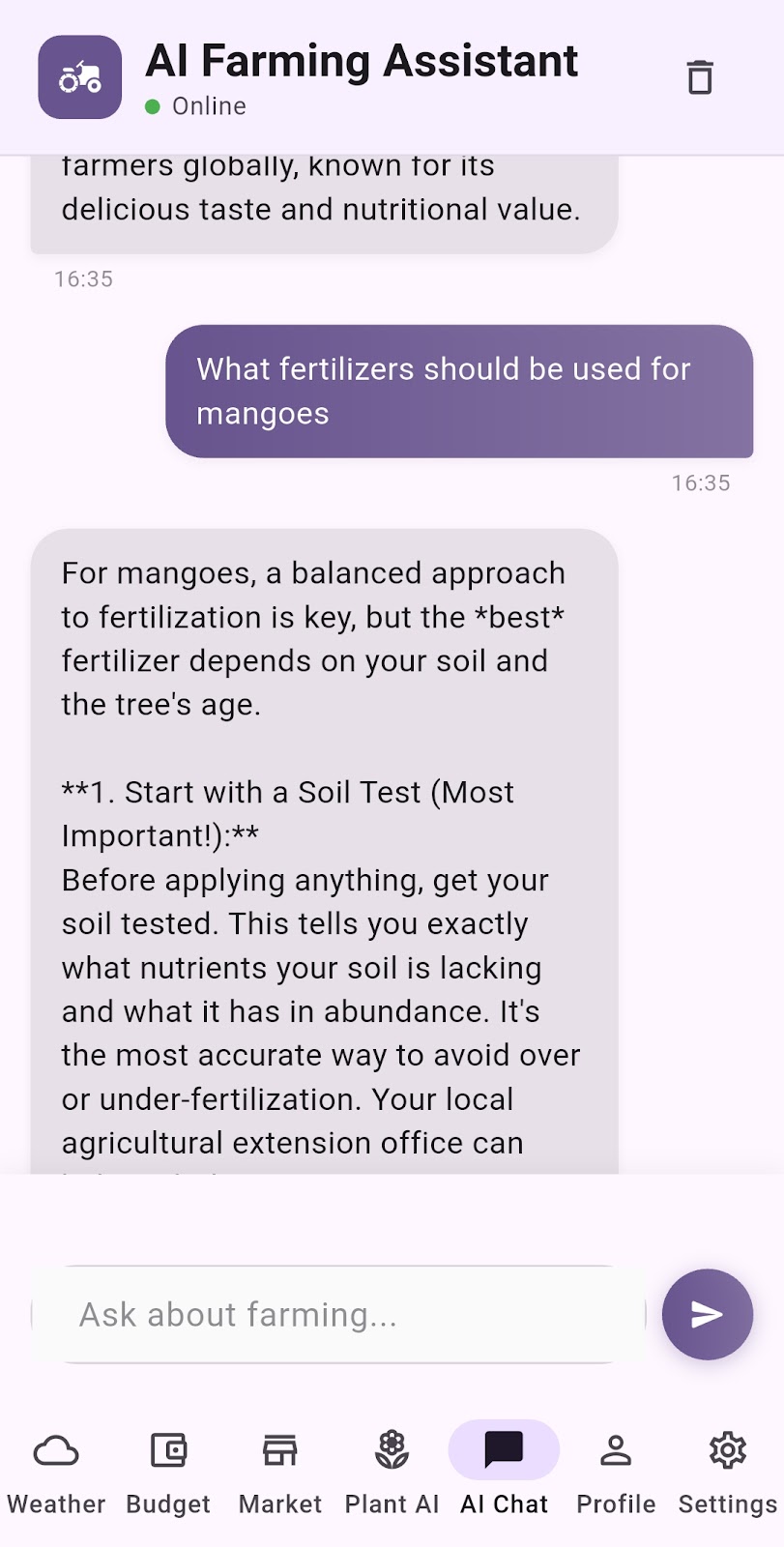
Agriculture Chatbot
Ask the AI anything about farming, soil health, fertilizer ratios, or market prices in your local language. Get instant, reliable answers.
Budget Management
Track your income and expenses daily, monthly, or yearly. See where your money goes and plan better
Equipment Marketplace
Need a tractor or harvester? Browse local listings to buy or rent farming equipment
Weather Forecasting
Get real-time weather data - temperature, humidity, wind speed. Plan your farming activities accordingly
Task Scheduler
Set reminders for watering, fertilizing, harvesting. Never miss an important farming task
Technical Details
Gemini API Integration
I built a **Cloudflare Worker** to handle the AI requests. The tricky part was handling rate limits from Google's API. Here's how I implemented **retry logic with exponential backoff**:
let apiResponse;
for (let attempt = 0; attempt < MAX_RETRIES; attempt++) {
    try {
        const response = await fetch(apiUrl, {
            method: 'POST',
            headers: { 'Content-Type': 'application/json' },
            body: JSON.stringify(payload)
        });

        if (response.ok) {
            apiResponse = await response.json();
            break;
        }

        if (response.status === 429 || response.status >= 500) {
            if (attempt < MAX_RETRIES - 1) {
                const delay = getExponentialBackoffDelay(attempt);
                await new Promise(resolve => setTimeout(resolve, delay));
                continue;
            }
        }
    } catch (networkError) {
        if (attempt < MAX_RETRIES - 1) {
            const delay = getExponentialBackoffDelay(attempt);
            await new Promise(resolve => setTimeout(resolve, delay));
            continue;
        }
        throw networkError;
    }
}
Structured JSON Responses
The AI needs to return consistent data every time. I enforce this using a **JSON schema** that guarantees we always get plant type, disease name, severity, and treatment steps:
const responseSchema = {
    type: "OBJECT",
    properties: {
        "plant_type": {
            "type": "STRING",
            "description": "Type of plant (e.g., 'Tomato', 'Rose')"
        },
        "disease_name": {
            "type": "STRING",
            "description": "Disease name or 'Healthy'"
        },
        "severity": {
            "type": "STRING",
            "description": "'Low', 'Medium', or 'High'"
        },
        "treatment_steps": {
            "type": "ARRAY",
            "items": { "type": "STRING" }
        }
    },
    required: ["plant_type", "disease_name", "severity", "treatment_steps"]
};
Tech Stack
Data Pipeline
Here's how the disease detection works from start to finish:
App Screenshots




Demo Video
Full walkthrough showing disease detection, marketplace browsing, weather updates, and budget management
Impact
What I Learned
- Managing a remote team across time zones is harder than I thought. Clear communication and realistic deadlines became essential
- Working with developers from different countries taught me how to adapt to different work styles and cultures
- I learned Flutter by working closely with our mobile developers and asking tons of questions
- Hardest part: convincing good developers to work for revenue share instead of upfront payment. Had to really sell the vision
- Most of us were students juggling classes and development. Time management became critical
- Biggest lesson: just start building. Don't wait for everything to be perfect. Things work out when you put in the time
- You have to believe in your idea and protect it, but also stay open to feedback
What's Next
AI Fertilizer Recommendations: Tell farmers which fertilizers to use based on their soil and crops
Government Form Automation: Auto-fill subsidy forms for farmers so they don't have to deal with paperwork
Agriculture News: Daily updates on farming policies, weather alerts, and market prices
More Languages: Add support for regional Indian languages beyond English and Hindi
Offline Mode: Let farmers use basic features even without internet